
Summary: If your hiring search is stalled, your compensation range, job scope, or overall offer may no longer match today’s market. Companies that regularly validate salary expectations with real-time recruiter feedback, clearly define their Employee Value Proposition (EVP), and align job titles with compensation consistently hire faster and lose fewer qualified candidates.
Here’s How to Fix It Before It Costs You a Hire
If you’re struggling to hire or sitting in a stalled search right now, wondering why qualified candidates keep going quiet, you’re not alone. We’re seeing it across the board right now.
Creative Alignments works on dozens of active searches at any given time, across functions, levels, and industries, including CPG, tech, and climate. We talk to candidates every day. We hear what’s important to them, what’s making them move, and what’s making them stay put. What you’re experiencing is a specific and solvable problem.
Here’s what’s happening in the hiring market today, which is very different from even a few months ago.
Has hiring has gotten harder lately?
Yes, and here’s the real reason.
Most hiring budgets were set last year, based on data that was already a few months old when it was published. Meanwhile, the market kept moving and changing quickly.
The NFIB’s May 2026 Jobs Report is about as direct as economic data gets: labor costs have hit their highest reading in the survey’s history as the single most important problem for business owners. A net 31% of small business owners have raised compensation recently. Candidates know this. They’re talking to peers, seeing what comparable roles are paying in states with salary disclosure requirements, and forming a clear picture of their market value in real time. When your range doesn’t match that picture, the conversation ends before it has a chance.
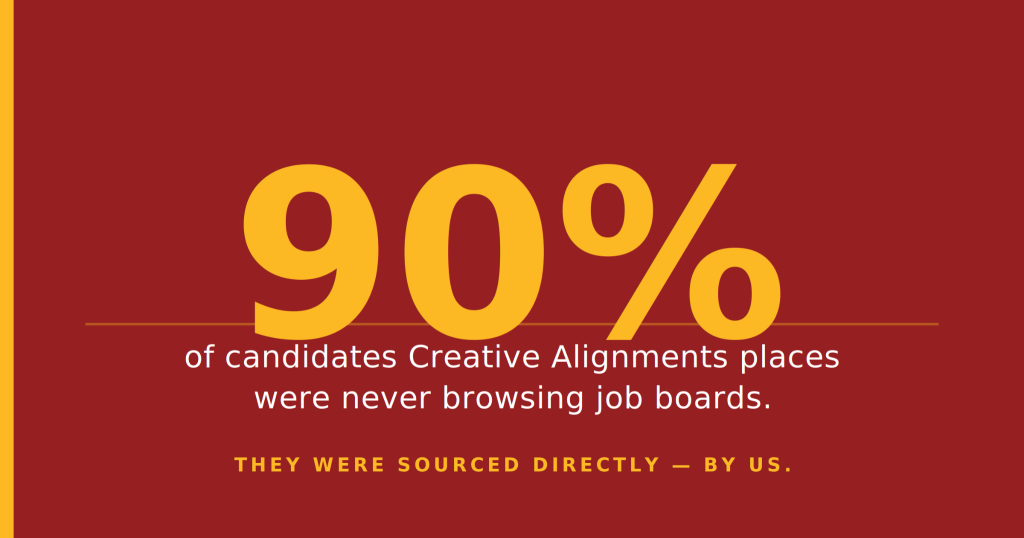
That last point matters more than most leaders realize. Ninety percent of the candidates Creative Alignments places were never browsing job boards. They were reached out to directly by one of our recruiters. When that conversation happens and comp comes up, we can get real-time feedback that the comp range doesn’t match what candidates expect for the role. There’s no application, no rejection, no data point in an annual comp report that tells you what happened. Just a search that is taking more time than you have.
The benchmark reports most companies rely on — industry salary guides, even well-regarded vertical-specific sources — are snapshots of a point in time. They’re useful context, but they’re not a live read. By the time a report is published, distributed, and used to set a budget, the underlying data can be six to twelve months old. In a market shifting as fast as this one, that gap matters.
What fills that gap is real-time intel from people who are in the conversations with candidates every day. If your recruiting partner is telling you that every qualified candidate at your salary range is pushing back, that is data to adjust to.
One more thing on comp: if your budget truly cannot move, the title may need to change. Going to market with a Director title and a Manager salary creates a mismatch that sourcing cannot fix. Candidates self-select based on title before they ever hear the number. Aligning the two honestly from the start saves weeks and a lot of frustration.
Will combining roles save me money?
No, that will cost more than you’ll save.
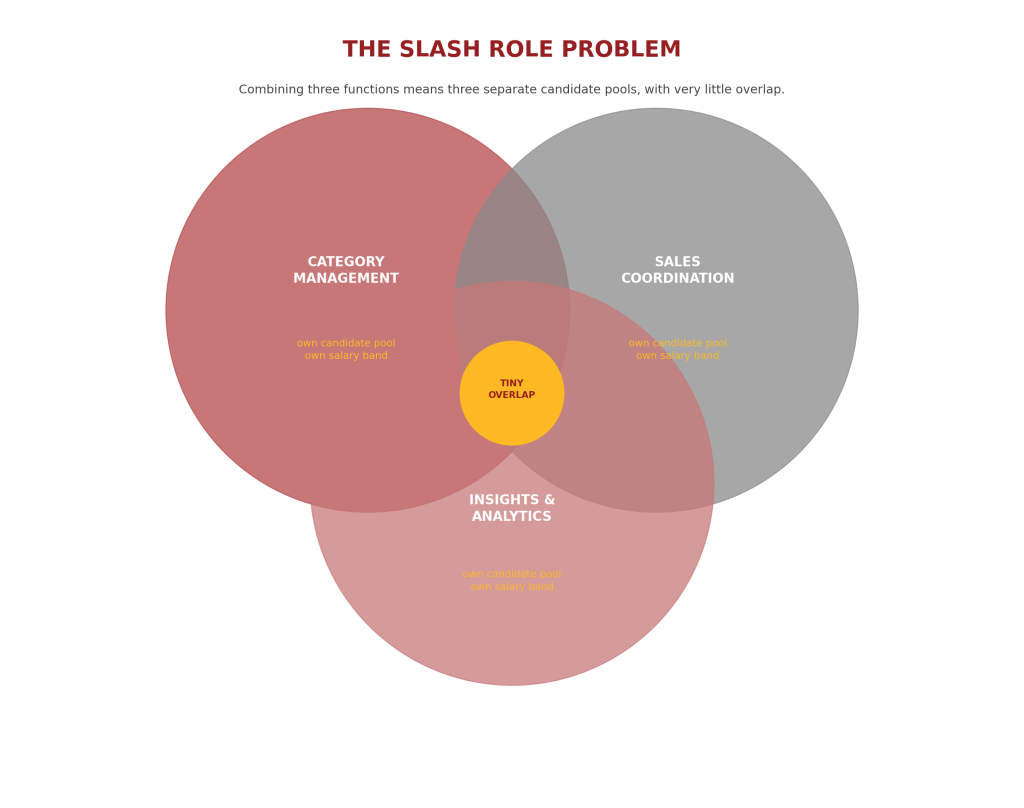
When salary can’t move and the workload is real, the instinct is to combine two or three roles into one. This multi-function role — what we call a “slash role” — sounds efficient, but in practice, it tends to extend the search, attract the wrong candidates, or both.
The question worth asking before you finalize any role: what kind of candidate will realistically want to step into this scope, at this salary, under these conditions — and is that the candidate you need to grow your business to the next level? The answer to that question tells you more than any job description will.
Of course, at early-stage companies, everyone wears multiple hats. The problem arises when a company tries to replicate a generalist approach at a more senior level, or combines functions that require genuinely different expertise, while pricing the role as if it were one of the component parts. That’s when the candidate pool shrinks, and the candidates who remain aren’t necessarily the ones you need.
As an example, we worked with a CPG client that built a role combining category management, sales coordination, and insights and analytics. Each of those is a distinct career path with its own candidate pool and salary expectation. Sourcing someone with genuine experience across all three, at a salary that didn’t reflect the combined scope, meant working from an extremely narrow universe. The candidates who had the right background weren’t interested in the package or the challenge. The ones interested didn’t have the right background or skills.
The same company had a Director of Sales role that would typically own a single retail channel. This one covered all retail channels. Senior sales candidates in CPG know what that title usually means and what it usually pays. A broader scope with compressed pay is not a trade-up for someone with options.
Another CPG client of ours needed a Marketing Manager who would lead a small team and also do a significant amount of individual contributor work, in the office from 8:30 to 5:30. That combination described two different types of candidates, and neither was well described by the title or the compensation. The search was hard. When the client listened to our recommendations and adjusted the requirements, the search gained traction and sped up.
In-office requirements compound everything. For a niche role with a tight budget, a commute requirement in a high-traffic market narrows an already narrow pool. One candidate CA was working with was the strongest we’d seen for a role after months of searching. They declined at the final stage because of the in-office requirement.
Is salary the number one reason great candidates say yes?
No. Learn why they say yes.
Salary is the threshold. Culture, mission, and purpose are what get someone over it. Benefits help make it possible for them to actually take the job.
In CPG, tech, and climate especially, candidates are often genuinely motivated by the work itself: the brand, the mission, the problem being solved. We’ve seen candidates take roles at below-peak salary because they believed in what the company was building and trusted the leadership team. That’s real, and it’s an asset worth knowing how to use.
But it only works above a certain base. Research and data show that workers today are seeking roles that feel sustainable, supportive, and aligned with their values — not merely chasing a paycheck, but looking for work that supports stability, growth, and a sense of belonging. That’s an opening for companies with strong cultures to compete on more than salary. It is not, however, a workaround for a salary that doesn’t clear a candidate’s basic threshold. Below that line, mission and culture don’t tend to close the gap.
The companies that use culture effectively in hiring are the ones that can articulate it and show proof it’s genuine. Not “we have a great culture,” but: here’s how decisions get made, here’s what growth has looked like for people in this role, here’s what our team cares about and experiences.
On benefits specifically: one of the consistent obstacles we see with candidates who are sincerely motivated to join a smaller, mission-driven company is gaps in foundational benefits — no 401K match, or no 401K at all. Health insurance coverage is another. These aren’t perks. For many candidates, they’re requirements.
One of our clients built a smart total-offer strategy around this. They preferred to bring people in at a slightly below-market base, leaving room for compensation to grow alongside the business. To make that trade-off work, they invested significantly in the rest of the package: a 10% 401K match, profit-sharing, fully covered health insurance for employees and 50% for spouses and dependents, unlimited PTO, 12 weeks of paid parental leave plus up to 8 weeks unpaid for both parents, and 13 company holidays. They also required a minimum of three days in the office each week — so they made sure the full offer justified it. That combination proved genuinely competitive, even against employers paying higher base salaries.
Before your next search, it’s worth mapping out your full offer across every dimension. Compensation is one element. Flexibility, benefits, leadership quality, growth trajectory, and mission make up the rest. Together, these form your Employee Value Proposition (EVP) — the answer to the question every strong candidate is asking themselves: “Why would I want to work here?”
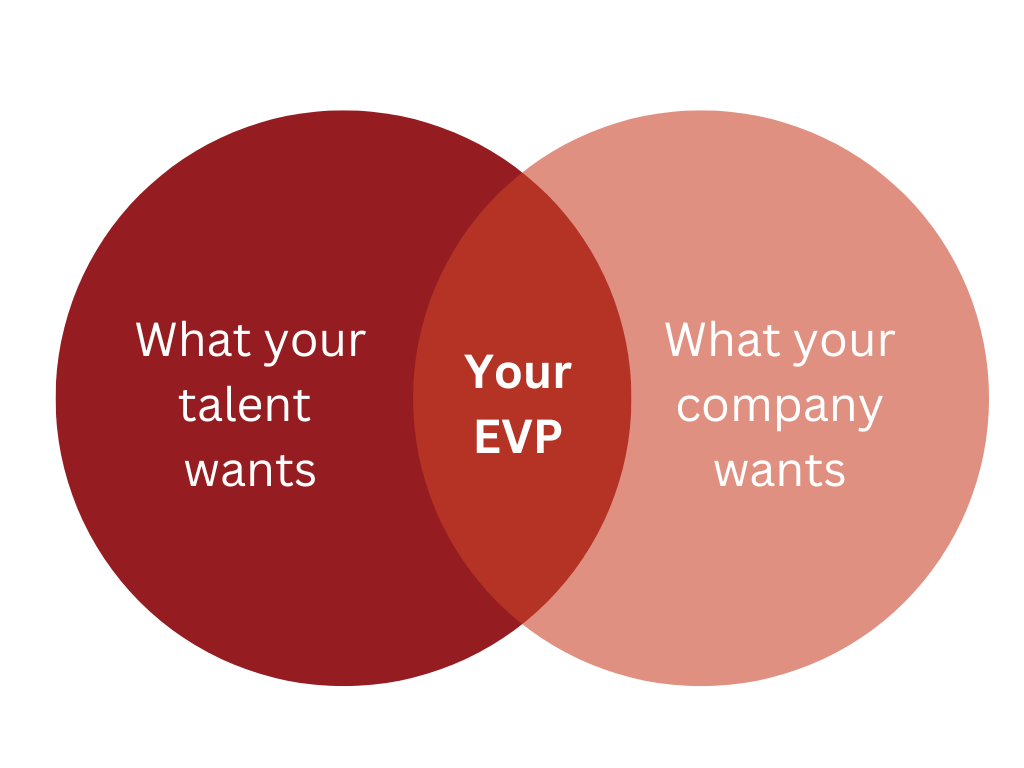
The best candidates are evaluating you as much as you’re evaluating them. A clearly defined EVP gives them a compelling, specific answer. Contact us to request our EVP Worksheet here.
What does a slow or stalled search actually cost my business?
There’s a version of this where holding the budget feels like the responsible call. In practice, it’s often the expensive one.
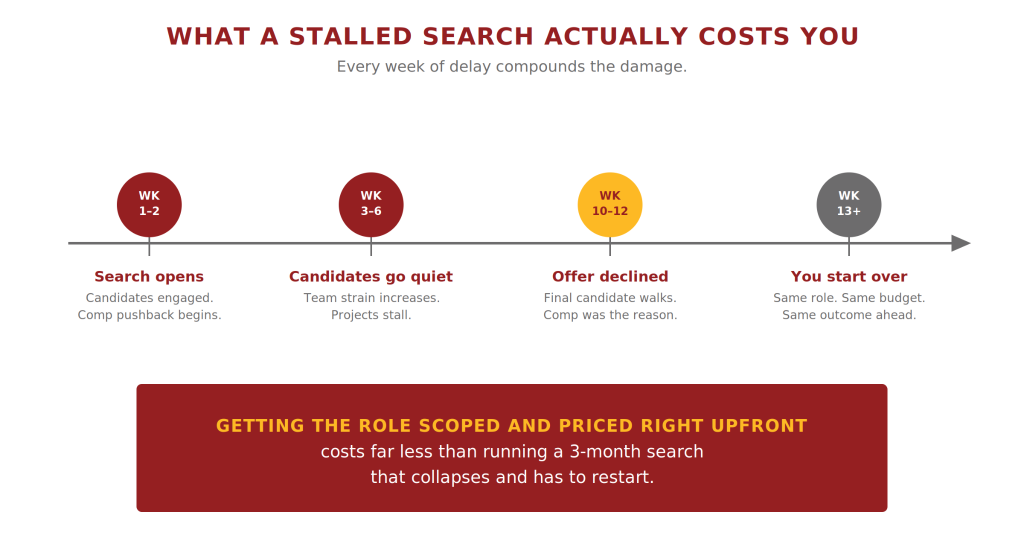
A search that stalls because comp isn’t matching candidates’ needs costs you time and lost opportunity. Every week a role sits open is a week of delayed work, strained teams, and interrupted momentum. When a candidate declines at the offer stage over salary, after weeks of conversations, internal interviews, and alignment, you start over.
We worked with a mission-driven tech company on a senior remote search. They held their salary budget through an extended process. Candidates got interested, got close, and backed off. The feedback was consistent. After months of the same friction, they flexed on comp. The search closed with an outstanding new hire within weeks.
The math favors getting it right the first time. A well-scoped role, priced accurately, with a clear and compelling offer takes less time to fill and loses fewer candidates at the finish line. The cost of clarity upfront — including sometimes a higher salary than originally planned — is lower than the cost of a six-month search that ends in a restart.
Getting current intel early isn’t a risk. Waiting to act on it is.
What do I need to do to hire well?
Hint: It starts before the search even opens.
The companies gaining a competitive advantage in talent aren’t necessarily the ones with the biggest budgets. They’re the ones willing to do the work before the search kicks off.
A few things we do at Creative Alignments that make the biggest difference for our clients:
Know your full offer before comp comes up. Salary is one line. Define your EVP and be ready to talk about it specifically.
Check your comp range against what the market is saying right now. Use benchmark reports as a starting point, then pressure-test them against live recruiter feedback. If the two don’t match, trust the live feedback.
Right-size the scope to match the budget. A role that combines three functions at the salary of one will attract a fraction of the candidates a well-scoped role would, and the candidates it does attract are often not set up for success. If the budget can’t support the full scope, adjust the scope.
Surface comp early and check it throughout. A candidate’s comfort with a number at week one may shift as they learn more about the role. Don’t wait until the offer to find out.
If the search is stalling, treat it as information. A funnel that isn’t moving is telling you something about the scope, the comp, or the conditions. The sooner that gets diagnosed, the less it costs.
Does it matter how my third-party recruiter is compensated for their work?
One practical question worth asking any recruiting partner: how are you compensated, and does it affect what you tell me?
Traditional contingency recruiters earn a percentage of a placed candidate’s first-year salary. So the higher the salary you offer, the more the recruiter is paid. That structure can create an incentive that is misaligned with transparency when they’re advising you on compensation. It’s worth factoring in.
A recruiter with no commission windfall at stake can give you more objective intel. When they tell you the comp needs to move, or the title needs to change, or the scope is too broad to fill at that price, it’s because the market is saying so — not because their fee goes up if you agree.
However you staff your searches, knowing how your partners are paid is a reasonable part of evaluating their recommendations.
Leaders, we see you. You have real budget constraints and real work to get done. The instinct to stretch a role or hold a salary number makes sense on paper. But the cost of those decisions shows up in the search, and it almost always exceeds the cost of getting it right from the start.
The good news is that this is solvable. It takes clarity on what you’re offering, honest and timely intel on what the market requires, and a strategy that runs from kickoff to close.
If your search is stalling and you’re not sure why, we’re glad to take a look. That conversation is free, and it usually doesn’t take long to spot where the friction is.
Start mapping your full employer offer:
Creative Alignments is a recruiting firm for purpose-driven companies in CPG, tech, and climate. We embed in your team, learn what you’re building, and work alongside you to find the people who will help you get there. No commissions. No conflicting incentives.
FAQ
Why is hiring so difficult in 2026?
Hiring has gotten harder because two forces are colliding. Companies are opening fewer roles and asking more of each one, while candidates have a clearer, more real-time picture of their market value than ever before. Budgets set months ago often don’t reflect what the market requires today, and that gap is what shows up as stalled searches, declined offers, and candidates going quiet.
How do I know if my salary range is competitive?
The clearest signal is what’s happening in your own search. If qualified candidates are consistently pushing back on comp, or the conversation ends as soon as a number comes up, that’s more current and more reliable than any annual salary report. Benchmark reports are a useful starting point, but they’re often six to twelve months old by the time they’re published and applied to a budget. Pressure-test your range against live recruiter feedback, not just published data.
What is a competitive compensation package?
A competitive package starts with a base salary that clears a candidate’s threshold for the role and level, but it doesn’t end there. It includes benefits, flexibility, growth opportunity, and the overall experience of working at the company. Above the base threshold, the rest of the package is often what separates a yes from a no. Below that threshold, no other element of the package reliably closes the gap.
What is an Employee Value Proposition?
An Employee Value Proposition, or EVP, is the full picture of what a company offers an employee in exchange for their work. It includes compensation, but also growth opportunities, culture, leadership, flexibility, and mission. A clearly defined EVP helps a company compete for talent on more than salary alone, and gives candidates a specific, credible answer to the question they’re asking themselves: what’s in it for me?
What is a “combo role” or “slash role”?
This refers to a role that combines two or more distinct functions into a single position, usually to control headcount costs. The challenge is that each function typically draws from a different candidate pool with different experience and salary expectations. The overlap between those pools is small, which narrows the field of qualified candidates and often extends the search. It is generally unlikely that you will find a candidate that is outstanding in all of the functions.
Should job titles match salary?
Yes. A mismatch between title and salary, such as a Director-level title attached to a Manager-level salary, creates friction that’s difficult to source around. Candidates evaluate titles against their own expectations before they ever see a number, and a mismatch causes strong candidates to self-select out early. If a budget can’t support a particular title, adjusting the title is often more effective than holding it and hoping the salary will be overlooked.
How much does an unfilled position cost?
The costs compound the longer a role stays open. Direct costs include recruiter time and any job posting expenses. Indirect costs are much higher and include delayed projects, strain on the team covering the gap, and lost momentum on whatever that role was meant to drive. This can limit productivity, innovation and customer satisfaction. When a candidate declines an offer late in the process, the cost multiplies, since the company restarts after having already invested weeks of internal time and alignment.
Why are salary surveys inaccurate?
Salary surveys are not inaccurate so much as they are dated by design. They’re built from data collected over a period of months, then compiled, published, and distributed, by which point the market has often moved. They’re a useful starting point, but they reflect a snapshot of the past rather than what’s happening in live conversations with candidates today. The most current intel comes from recruiters and hiring teams who are actively talking to candidates.
How often should salary ranges be updated?
Salary ranges should be checked before every search opens, not set once a year and left alone. A range that was accurate two quarters ago may already be behind, particularly in a market where compensation is moving quickly. The most reliable check is comparing your range against what your recruiting team or partner is hearing in current conversations with candidates, not relying solely on the last published benchmark report.
Why are multi-function roles difficult to hire for?
Multi-function roles, sometimes called combo or slash roles, combine responsibilities from two or more distinct positions into one job. Each function usually has its own candidate pool, skill set, and salary expectation, and asking for all of them in one person, often at a salary reflecting only one of those functions, significantly narrows the available talent pool. The candidates with the full range of required experience are often not interested in the compressed scope or pay, while the candidates interested in the role often don’t have the full range of experience needed.
How can smaller companies compete with larger employers for top talent?
Smaller companies rarely win on salary alone, and they don’t need to. They can compete by clearly articulating what larger companies often can’t: a specific, lived culture, meaningful ownership over outcomes, direct access to leadership, and a mission candidates can genuinely connect with. The companies that do this well treat it as a deliberate strategy, not an afterthought, and define what makes their offer distinct before a search opens rather than discovering it candidate by candidate.